Two pliers, one endless argument
If you ask ten electricians whether Klein or Knipex makes the better lineman's pliers, you will get twelve opinions. Both are legitimate professional tools. Both will last years in a working electrician's belt. The real question is which one fits your hands and your work better.
Grip and comfort: how they feel in your hand all day
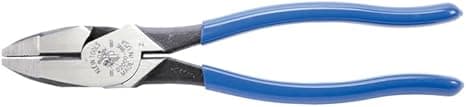
The Klein D2000-9NE uses a dipped plastic grip that most American electricians grew up with. It is slim, it fits standard tool pouches well, and it provides a solid no-nonsense hold. If your hands run large, Klein feels like it was made for you.
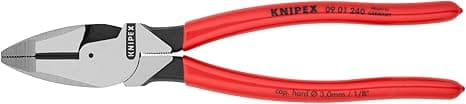
The Knipex 09 01 240 uses a multi-component comfort grip that is slightly wider and has more cushion. Electricians who deal with hand fatigue or long days of pulling and twisting often prefer the Knipex feel. The trade-off is a slightly bulkier profile in a tight pouch.
Cutting performance: where the steel tells the story
This is where Knipex pulls ahead for most users. The Knipex cutting edge uses oil-hardened chromium vanadium steel that stays sharp noticeably longer than the Klein edge. Cutting through #12 and #10 solid copper feels cleaner on the Knipex, and the blades tend to hold their alignment longer over months of daily use.
Klein is no slouch — the D2000-9NE cuts cleanly out of the box and handles everything a journeyman throws at it. But if you are cutting wire all day, every day, Knipex wins this round on edge retention.
Crimping: Klein's quiet advantage
The Klein D2000-9NE has a well-defined crimping die right behind the pivot. It handles standard crimp connectors cleanly and is a feature many Klein users rely on daily without thinking about it.
Knipex includes a crimping area as well, but it is less pronounced. If crimping connectors is a regular part of your workflow, Klein has the edge here.
Durability: both will outlast your apprenticeship
Both tools are built for professional daily use. Klein offers a lifetime warranty through authorized dealers. Knipex does not offer a formal lifetime warranty in the US, but their build quality means most electricians never need to test the warranty anyway.
The pivot on the Knipex tends to stay tighter over time. The Klein pivot can develop play after heavy use, though many electricians consider that normal break-in.
Price and value: what you get per dollar
| Feature | Klein D2000-9NE | Knipex 09 01 240 |
|---|---|---|
| Street Price | $39.98 | $45.99 |
| Length | 9.39" | 9.5" |
| Weight | 12 oz | 13.4 oz |
| Grip Style | Dipped plastic | Multi-component comfort |
| Crimping Die | Yes — well-defined | Yes — less pronounced |
| Edge Retention | Good | Excellent |
| Made In | USA | Germany |
At roughly $6 apart, price is not the deciding factor here. Both are in the same tier. The Knipex costs a little more and gives you better cutting longevity. The Klein costs a little less and gives you a better crimper and easier US availability.
The verdict: which one should you buy?
If you want the tool most American electricians carry, exceptional crimping, and easy warranty support, go with the Klein D2000-9NE. It is the industry default for a reason.
If you want the best cutting edge, smoother action, and longer-lasting pivot, go with the Knipex 09 01 240. Once you try Knipex cutting performance, it is hard to go back.
Either way, you are buying a professional tool that will serve you for years. The wrong answer is the cheap no-name pair from the bargain bin — not either of these.
Frequently Asked Questions
Are Knipex lineman's pliers better than Klein?
It depends on what you prioritize. Knipex pliers generally offer a smoother cutting action and last longer on the cutting edge. Klein pliers have a more traditional American feel, excellent crimping capability, and wider availability at electrical supply houses.
Why are Knipex pliers more expensive?
Knipex pliers are manufactured in Germany with a proprietary oil-hardened steel and a multi-step forging process. The higher price reflects tighter tolerances and a cutting edge that typically stays sharp longer than competitors.
Can I use lineman's pliers for crimping?
Yes. Both Klein and Knipex lineman's pliers have a crimping die built into the jaws. Klein's crimper is more pronounced and generally preferred by electricians who crimp frequently on the job.
Which lineman's pliers do most electricians use?
In the United States, Klein dominates the market. Knipex has been gaining ground steadily, especially among younger electricians and those who have tried both. In Europe, Knipex is the clear leader.
Build Your Kit
First Year Apprentice Gear Kit
See the full recommended gear list for first-year apprentices, including our top lineman's pliers pick.